


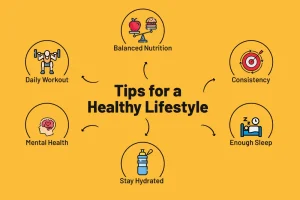
Energy is the currency everything else in your life is paid in — work, family, mood, patience. Yet most people treat it as weather: good some days, bad others, nobody knows why. In truth, daily energy is mostly the output of a handful of healthy lifestyle habits, repeated quietly. This guide covers the ones with the strongest effect — sleep, movement, food, light and digital boundaries — and how to install them in a busy life without turning your routine into a second job.
Sleep: The Habit Every Other Habit Stands On
Nothing substitutes for sleep. Adults who regularly sleep under seven hours show measurably worse concentration, mood and immunity, and no coffee strategy closes the gap. The fix is rarely mysterious: a consistent wake time, a dark and cool room, screens dimmed in the last hour, and caffeine finished by early afternoon. Consistency matters more than duration tricks — a steady seven hours beats a chaotic nine.
Treat your bedtime like an appointment you set with tomorrow’s self. If falling asleep is hard, build a wind-down ritual: shower, stretch, read, lights low. Within two weeks, the ritual itself becomes the signal. Among healthy lifestyle habits, this one returns the most, because a rested brain makes every other good decision easier — including the decision to keep the other habits.
Move a Little, Often, Every Day
You do not need a gym membership to be active; you need to interrupt sitting. Aim for a daily walk of twenty to thirty minutes, take stairs when they appear, and stand or stretch for a few minutes every hour of desk work. Research consistently finds that people who move lightly all day often feel better than those who sit for ten hours and then train hard for one.
Anchor movement to things that already happen: a walk after lunch, a call taken on foot, a short stretch while the kettle boils. Anchored habits survive busy weeks; scheduled workouts are the first casualty of them. Add two short strength sessions a week if you can — bodyweight exercises at home count — because muscle protects joints, posture and metabolism as the years pass.
Eat for Steady Energy, Not Spikes
Energy crashes are often just blood-sugar swings wearing a disguise. Build meals around protein, fibre and whole foods, keep ultra-processed snacks as the exception, and do not skip breakfast if skipping it leads to a midday raid on the vending machine. Hydration is the quiet variable: even mild dehydration measurably dulls concentration, so keep water visible and drink before you feel thirsty.
Keep the system simple enough to survive your worst week. A few repeatable meals you can make on autopilot, a stocked freezer, fruit where the biscuits used to be — environment beats willpower every time. Healthy lifestyle habits around food succeed when the healthy choice is also the easy choice, so design your kitchen the way you would design it for a friend you wanted to help.
Light, Screens and the Evening Boundary
Morning daylight is a powerful, free energy tool: ten minutes outside early in the day sets your body clock, improving both alertness and the following night’s sleep. The evening mirror of that habit is a screen boundary. Endless feeds are engineered to keep you scrolling past the point of enjoyment — the same engagement machinery that online platforms of every kind use to hold attention, as anyone who has read about how online game experiences are designed will recognise. Set a stopping point, charge the phone outside the bedroom, and let the evening end on purpose.
Digital hygiene also means protecting yourself while you are online. Use strong, unique passwords and log in carefully on every device — this overview of secure login habits for mobile and desktop users is a useful checklist. A compromised account is a special kind of exhaustion, and it is entirely preventable with habits that take minutes to set up.
Stress: Manage the Load, Not Just the Feeling
Chronic low-level stress drains energy as reliably as poor sleep. The practical countermeasures are unglamorous: a written list that gets worries out of your head and onto paper, single-tasking instead of juggling, short breaks before you are desperate for them, and at least one genuinely absorbing non-screen activity in the week — a sport, an instrument, a garden, a game played with actual people.
Support matters as much as technique. When something goes wrong in modern life — a locked account, a billing dispute, a service failure — knowing how to get a real answer quickly reduces the stress tax considerably. It is worth learning, for any service you rely on, what good support looks like and how responses usually work; this piece on support responses and common questions before you start shows the pattern to expect and the information to have ready.
People and Place: The Overlooked Energy Sources
Energy is social and environmental, not just physical. Time with people who leave you lighter — and less time, where you can manage it, with situations that reliably drain you — changes your baseline as surely as sleep does. So does your physical space: daylight at your desk, a chair that does not punish your back, and a home that is tidy enough to rest in all lower the background cost of every day. Small fixes in either area are worth one experiment each before you conclude you simply have “low energy”.
Stack Habits Slowly and Keep the Streak Small
The classic mistake is installing six habits on Monday and abandoning all six by Friday. Choose one habit, shrink it until it feels almost too easy — ten minutes of walking, lights out twenty minutes earlier — and keep it for two weeks before adding the next. Small wins compound into identity: you become a person who does these things, and identity maintains habits long after motivation fades.
Track simply, forgive lapses quickly, and design for your real life rather than an ideal one. Healthy lifestyle habits are not a performance; they are infrastructure. Build them one at a time, and within a few months you will notice the change in the most ordinary moments — waking clearer, working steadier, ending the day with something left in the tank. That is what the habits are for.

